 Call: (636) 795-6339


- St. Charles Local
Serving St. Charles, MO and surrounding areas.
- Built to Last
Clean, durable, low-maintenance outdoor work. Call or text (636) 795-6339.
 St. Charles Local
 Built to Last
Sod Installation in St. Charles, MO
We lay fresh sod for homeowners in St. Charles and the towns around it, and we lay it after the grade. A patchy lawn, a yard gone to weeds, a bare lot or a lawn that dips and holds water all get the same start: ground that is smooth, level and shaped to drain, then new sod rolled out on top.
Good Ground First, Then Fresh Sod
NOAA's 1991-2020 normals for St. Louis Lambert airport give 13.05 inches of precipitation in spring, March to May, and 47.1 days a year at 90°F or more. So the weather here asks two things of a new lawn: come through a wet spring, then get through a hot summer.
New sod settles in well when it is laid on good ground and kept watered. In a hot summer stretch, that means watering it more.
The soil is the other half. Around St. Charles, the ground is often clay: it holds water after a rain, swells up wet and shrinks back as it dries. Lay sod over a low spot and the low spot stays, now soggy under new grass. Lay it over ruts and bumps on a rolling yard and they show through. The storms and the freeze-thaw winters find every soft spot that was never fixed.
Can You Lay Sod Right on Dirt?
Sod belongs on soil, but not on just any dirt. Packed clay, rough fill left from building or ground still covered in old grass and weeds give the new roots nowhere to go. The sod sits on top, dries out at the edges and never knits to the ground.
Here is what goes down before the first roll:
- The old lawn comes off: old grass and weeds are stripped out, never buried under the new sod.
- The grade: high spots cut down, low spots filled and the yard shaped so water runs away from the house. That is the same work as our yard grading and drainage.
- Topsoil: brought in where the ground is thin or hard, then spread and leveled, so the roots have loose soil to grow into.
- A final rake: the surface smoothed, so every roll lies flat.
How much topsoil a yard needs depends on what is there now and how much the grade has to change. We tell you when we look at the job.
How We Install Sod
Once the ground is ready, the sod goes down in the same order every time:
- Tight seams: the rolls are laid edge to edge and pushed snug, with the seams staggered like brick, so no long joint runs across the lawn.
- Clean cuts: the sod is trimmed around beds, walks, patios and trees, so the edges finish neat.
- Rolled: a lawn roller goes over the whole area, so the sod touches the soil everywhere, with no air pockets under it.
- Watered in: soaked right after it is laid, so the roots and the soil under them start out wet.
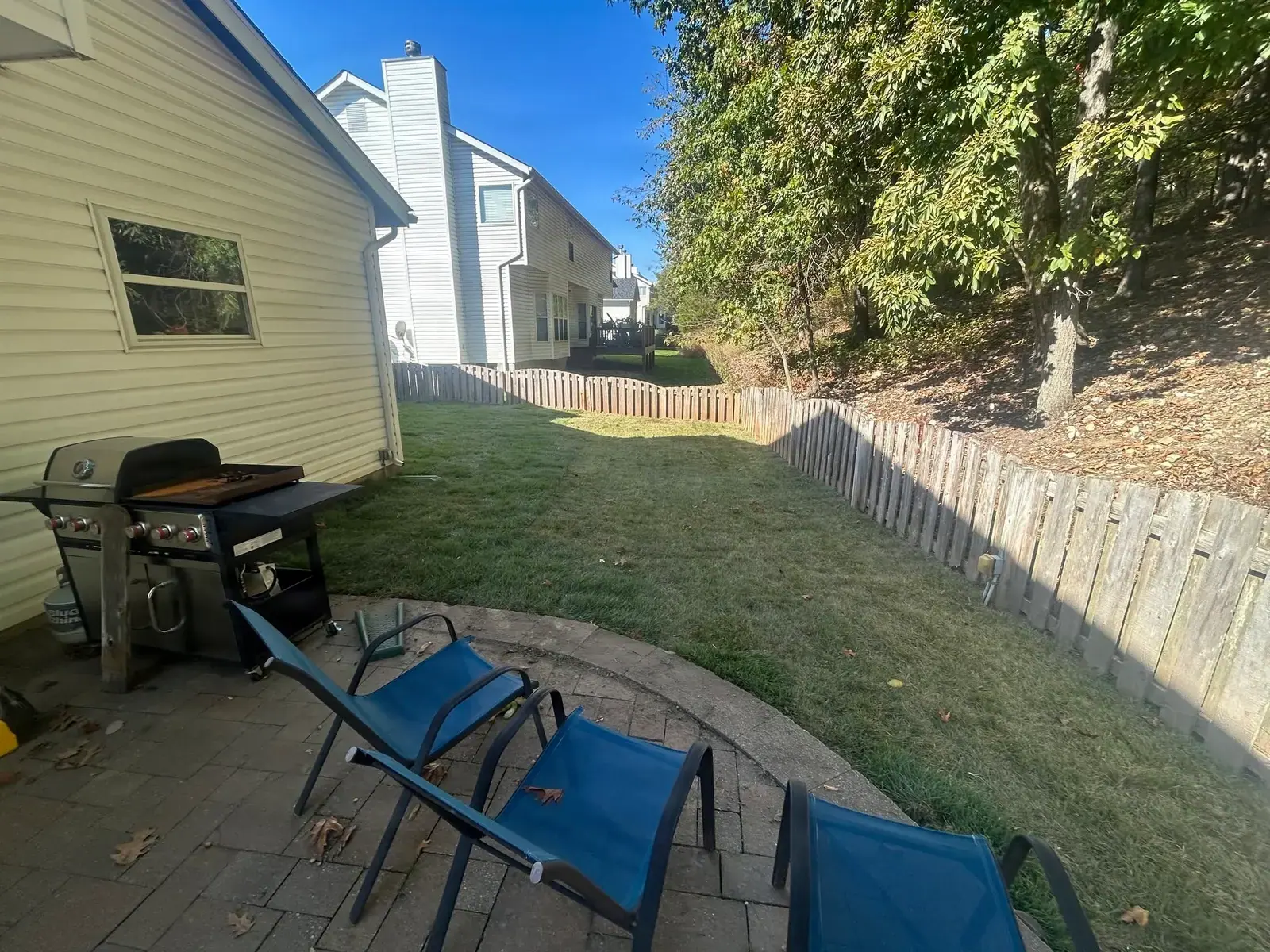
Our own sod jobs include a new lawn laid under trees beside a stacked stone wall, fresh sod edged with stone along a fence, sod run right up to a concrete patio by a covered porch post, and new sod beside a patio and grill. Different yards, the same order of work.
As Auggie puts it: "We just wrapped up another full grade + fresh sod install and the transformation is night and day. Smooth, level, drains right, and ready to mow."
Is Sod Easy to Install?
Laying the rolls is the part people picture, and it is the easy part. Sod is heavy, more so when it is wet, and a whole yard is a lot of rolls to carry. The real work is under it: stripping the old lawn, moving dirt, bringing in topsoil and getting the grade right.
That ground work is also the part that is easy to skip. Sod laid on a yard that was never leveled shows every dip, and sod on packed clay struggles to root. We do the grade and the sod as one job, so the new lawn starts on a yard that drains.
After the Sod Goes Down
Once we finish, the new lawn is in your hands, and how you treat it early on matters. Here is what we ask:
- Water it as we tell you: we go over how much and how often for your yard and the weather before we leave.
- Keep off it while it roots: people, pets and anything heavy stay off until it has taken hold.
- The first mow: only once the sod has taken hold and a corner no longer lifts when you tug it.
In a hot, dry stretch, new sod needs more water, not less. The lawn care after that is yours or your lawn service's; it is not our work.
New sod often goes in with other work. Beds and edging around the new lawn are part of our landscaping. If a downspout keeps flooding one corner of the yard, burying the downspout carries that water off in a pipe instead of across the new grass.
What Decides the Cost of Sod
No two yards cost the same to sod. These decide it:
- The size: how much of the yard gets new sod.
- Tear-out: how much old grass, weeds or debris has to come off first.
- The ground: how much grading the yard needs and how much topsoil goes in.
- Getting to the yard: how far the sod and topsoil travel from the street, and whether a skid steer fits through your gate.
- The sod you pick: the grass type, talked through with you for the sun and shade in your yard.
We serve St. Charles and the towns around it, out to Wentzville and Lake Saint Louis. Text (636) 795-6339 with a few photos of the yard, or call, and we come out for a look and a quote.
Ready for Fresh Sod?
Call or text (636) 795-6339 about your project.
Common Questions

-
Sod gives you a full lawn the day it goes down, and it covers bare ground on a rolling yard right away. If you want a lawn now on a freshly graded yard, sod is what we lay. Call or text (636) 795-6339 to talk it through.
-
That depends on your yard: how much sun it gets, the shade under your trees and how you use the lawn. We talk the grass type through with you when we look at the job, before any sod is ordered.
-
Not until it has rooted into the soil, and how long that takes depends on the season, the weather and how well it is watered. A gentle tug at a corner tells you: when it holds to the ground, it is rooting. We tell you what to look for when we finish the job.
-
Clear what you can off the lawn: furniture, toys, pots and anything stored there. Tell us about anything buried that you know of, like an old downspout line, and whether a gate is wide enough for a machine to reach the back yard.
-
Call or text (636) 795-6339 with what you have in mind (photos help), or send the form on our contact page. We come take a look at the job and give you a quote.
Ready to Get Started?
Call or text Gantner Outdoor Contracting at (636) 795-6339 about your project.
-
- Service Area St. Charles, MO
& St. Charles County - Get a Quote Call, text or send the formPatios, walls, yards & sod
- Find Us Online


