 Call: (636) 795-6339


- St. Charles Local
Serving St. Charles, MO and surrounding areas.
- Built to Last
Clean, durable, low-maintenance outdoor work. Call or text (636) 795-6339.
 St. Charles Local
 Built to Last
Yard Grading & Drainage in St. Charles, MO
We grade and level yards around St. Charles: low spots that hold water after a rain, water running toward the house, a lawn gone bumpy or sunken, a yard left rough after building. In our own words, the job starts with “Fix low spots / standing water.”
The goal is plain. When we finish, the yard is smooth, level and drains the way it should, ready for sod, beds or a patio.
What Yard Grading Means
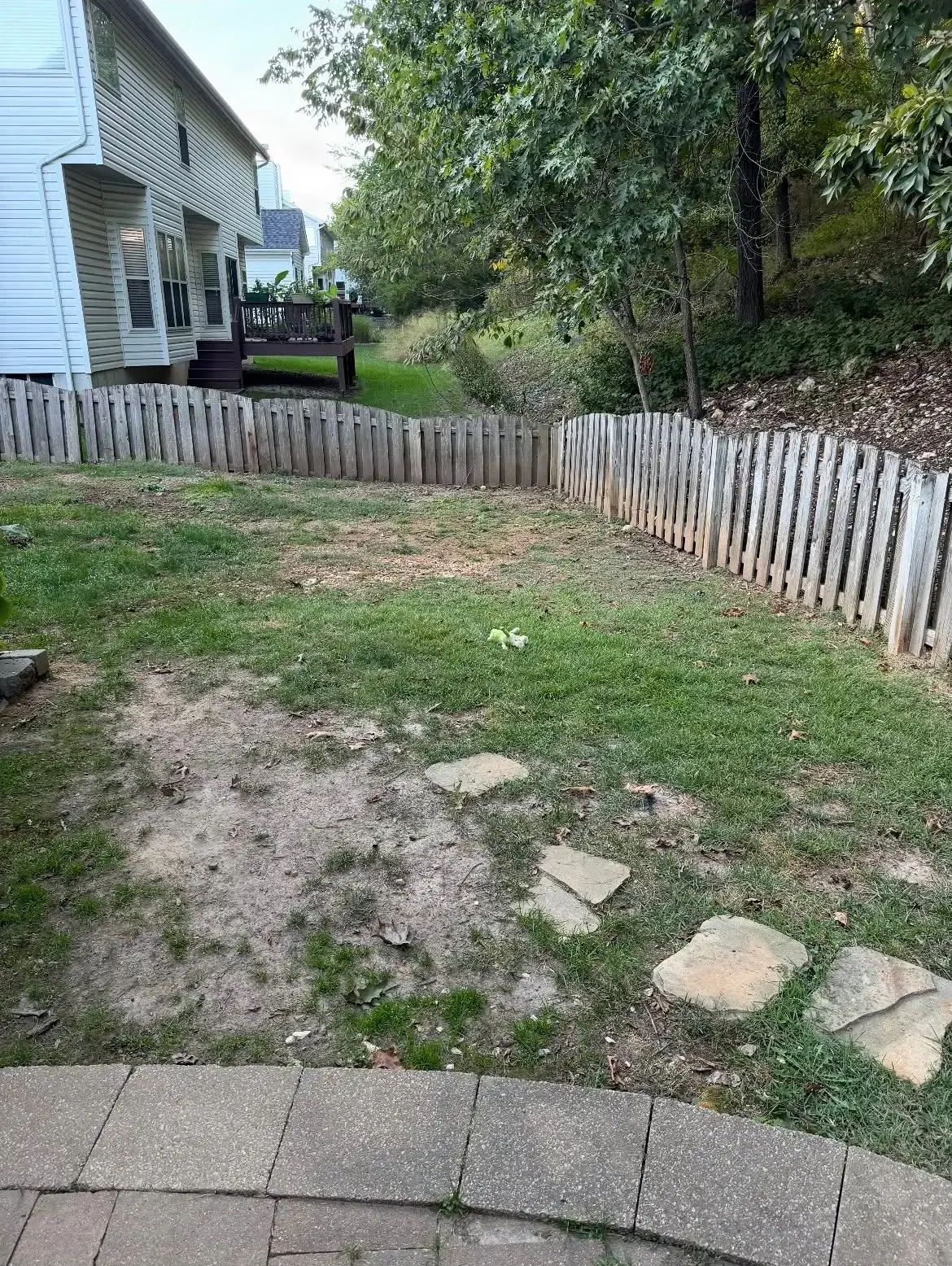
Grading a yard means shaping the ground so rain runs where you want it: away from the house, around it, and off the yard instead of into a low spot. Leveling is the other half of the job: taking out the bumps and dips so the lawn is even to walk on and mow.
It is dirt work, done with a machine and finished by hand. Soil is cut from the high spots and filled into the low ones, then topsoil goes on wherever grass or plants will grow.
Regrading is the same work on a yard that already has a lawn. The old grade is read first, then the ground is reshaped where the water goes wrong.
Clay Ground and Rain in St. Charles County
The county's soil survey from the USDA NRCS puts 29.7% of St. Charles County's acres in hydrologic soil group D, the group slowest to soak up water. Another 28.1% is group C, and 15.3% is C/D.
NOAA's 1991-2020 normals for St. Louis Lambert airport give 41.7 inches of precipitation a year. Put those numbers together and most ground here takes water in slowly, so a yard that holds water needs a better grade, not more hope.
Much of that slow ground is clay. It holds water, swells when it is wet and shrinks as it dries, and the freeze-thaw winters work on any spot that stays soggy. On the rolling yards around here, storm water also picks up speed down a slope and stops at the first low spot it finds.
These are the signs a yard needs a better grade:
- Standing water: puddles that sit long after the rain stops, and grass that stays soft underfoot.
- Water toward the house: ground that slopes back to the foundation instead of away from it.
- A bumpy or sunken lawn: ruts, dips and settled trenches that make mowing a chore.
- A rough yard after building: leftover fill, ruts from trucks and no topsoil to grow in.
- Washed-out soil: mud and mulch carried off a slope after every storm.
How We Grade a Yard
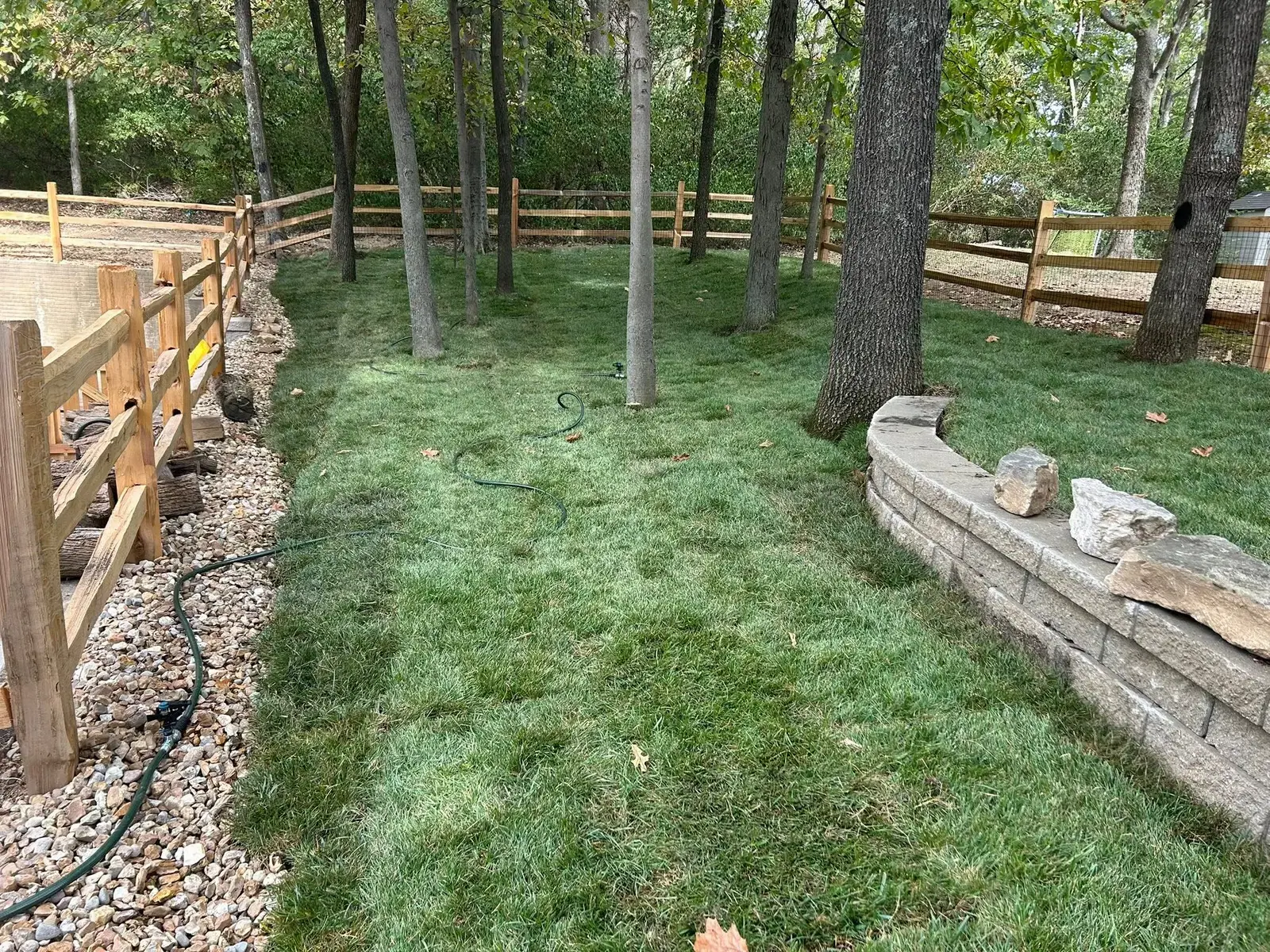
There is no single right way to grade every yard. The grade depends on where the water comes from and where it can go, so that is where we start.
- Read the water: where the roof, the slope and the yards next door send it, and where it can leave your yard without landing on a neighbor.
- Cut and fill: soil comes off the high spots and goes into the low ones, packed down as it goes in so it doesn't settle into a new dip.
- Topsoil: we bring in topsoil where the lawn or the beds will grow.
- Shape the slope: a gentle fall away from the house, or a shallow swale that carries water around it.
- Smooth it out: a skid steer spreads and levels the soil, a laser or a string line checks the grade, and the surface is rolled smooth.
The rest of the job, as we put it: “Topsoil, dirt work & drainage correction.” Our own jobs include a full yard grade ahead of fresh sod, with the skid steer spreading and leveling the soil, and a finished grade smoothed out and ready for the sod rolls.
Some things only show once the ground is open: rubble buried after building, roots, a soft wet patch or clay too wet to pack down. We tell you what we find, and what it changes, before we go on.
Plan What Goes on the New Grade
Decide what the yard is for before the grade goes in, because what sits on top changes how the ground is shaped. A few things to settle with us first:
- Grass: fresh sod laid on the new grade, so the yard is green and ready to mow once it roots.
- Beds and plants: where the beds go, so the soil there is shaped for them and drains away from the house.
- A patio or a pad: where concrete will sit, so the ground around it falls away from it.
Water from the roof is its own job. If the downspouts dump next to the foundation, we can bury the downspouts and carry that water out into the new grade.
Where a slope is too steep to grade into a gentle fall, a retaining wall can hold it back and leave flatter, usable ground behind it.
What Decides the Cost of Yard Grading
There is no set number for grading a yard. These decide it:
- The size: how much of the yard gets graded.
- The digging: how much soil is cut and filled, and whether old sod, rubble or an old bed comes out first.
- The ground: how wet and soft the clay is, and how much topsoil comes in.
- Access for the machine: how a skid steer gets into the back yard past a narrow gate, a shed or a slope.
- What goes on top: sod, beds and plants, or a patio.
We see all of that when we come take a look, and then you get a quote. We're based in St. Charles and serve homeowners around it, from St. Peters to Chesterfield.
Photos of the yard after a rain help us see where the water sits, so send a few along when you call or text (636) 795-6339.
Water Sitting in Your Yard?
Call or text (636) 795-6339 about your project.
Common Questions

-
It depends on the size of the yard, how much soil has to be cut and filled, how much topsoil comes in, how easily a skid steer can reach the work and what goes on top, like sod or beds. We see all of that when we look at the yard. Call or text (636) 795-6339 for a quote.
-
It is heavy dirt work: soil cut and moved with a machine, topsoil brought in, and the slope checked with a laser or a string line so the water runs where it should. Wet clay, a tight back yard or a slope close to the house make it harder. That is a job for a machine and a careful grade, not a shovel and a weekend.
-
A better grade gives the water somewhere to go, so it runs off instead of sitting in a low spot. Heavy rain is still heavy rain, and slow clay ground can stay soft for a while after a storm. Water from the roof often needs its own fix, which is why we look at the downspouts too.
-
Tell us where water sits after a rain, and send photos taken during or after a storm if you have them. Point out anything buried you know about, like a buried wire or a line out to a shed, and clear the yard of things that can be moved. Decide what goes on top (sod, beds or a patio) so the grade is shaped for it.
-
Call or text (636) 795-6339 with what you have in mind (photos help), or send the form on our contact page. We come take a look at the job and give you a quote.
Ready to Get Started?
Call or text Gantner Outdoor Contracting at (636) 795-6339 about your project.
-
- Service Area St. Charles, MO
& St. Charles County - Get a Quote Call, text or send the formPatios, walls, yards & sod
- Find Us Online


