 Call: (636) 795-6339


- St. Charles Local
Serving St. Charles, MO and surrounding areas.
- Built to Last
Clean, durable, low-maintenance outdoor work. Call or text (636) 795-6339.
 St. Charles Local
 Built to Last
Buried Downspouts in St. Charles, MO
We bury downspouts around St. Charles. The water off your roof goes into a pipe underground and comes out away from the house, instead of dropping at the foundation, bouncing off a splash block or running through a pipe laid across the lawn.
Our own list of work puts it in two words: “Downspouts buried.” It is a simple job, and it changes where the roof water goes in every storm.
How Buried Downspouts Work
A buried downspout is a pipe in a sloped trench. It connects to the bottom of the downspout, runs underground downhill and away from the house, and ends where the water can come back up and spread out at the surface.
That end can be a pop-up emitter, a cap set in the lawn that lifts when water pushes through and drops back when it stops. Or it can be an open end at a lower spot in the yard, where the water runs out onto the grass.
The pipe only works if it falls the whole way. A pipe that dips holds water in the low spot, and in a freeze-thaw winter that water can freeze inside it.
Is Burying Downspouts a Good Idea?
Where the yard lets the water get away from the house, it usually is. NOAA's 1991-2020 normals for St. Louis Lambert airport count 11 days a year with 1.00 inch of rain or more, and on a day like that a roof sends a lot of water down each downspout at once.
The clay ground around St. Charles takes that water in slowly. Dropped at the foundation, it soaks the soil right along the house, washes out the beds and keeps that clay swelling when it is wet and shrinking as it dries.
A splash block or an extension on top of the lawn moves the water a little way out, but it is in the way of the mower and gets kicked loose. A buried pipe is out of sight and stays where it was laid.
It is not a good idea where the water has nowhere lower to go. A flat yard, or one that slopes back toward the house, may need yard grading first, so the pipe has somewhere downhill to end.
How We Bury Downspouts
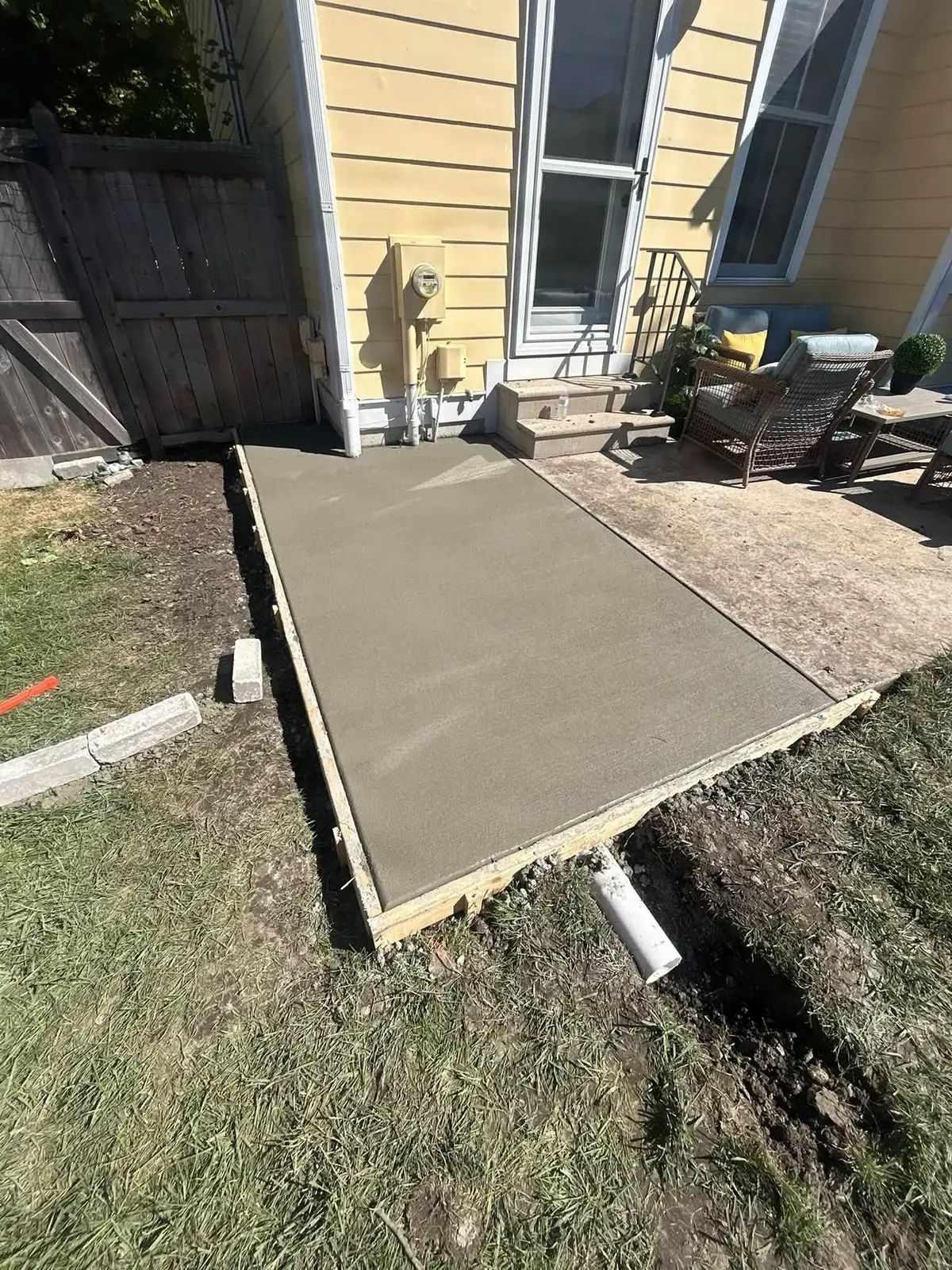
Every run starts with the question of where the water can go. On the rolling yards around here, the answer can be a lower corner or the edge of the lawn, well clear of the house.
- Plan each run: where each downspout can go, downhill and away from the house, and never onto a neighbor's yard.
- Dig the trench: dug with a steady fall from the downspout to the end, so the pipe drains the whole way.
- Connect and lay the pipe: the pipe is fitted to the bottom of the downspout and laid along the trench to its end.
- Set the end: a pop-up emitter in the lawn or an open end at a low spot, where the water can spread out.
- Backfill and put it back: the trench is filled and packed, and the sod or mulch goes back on top.
Our own jobs include a buried drain pipe ending at the edge of a graded yard, next to a formed concrete pad.
Some things only show once the trench is open: roots, rock, an old pipe or a soft wet patch of clay. We tell you what we find, and what it changes, before we go on.
Utility Lines Come First
Missouri's dig law, RSMo 319.026, calls for notice of a dig “at least two working days, but not more than ten working days, before the expected date of commencing the excavation activity.” That is the state's rule, so the underground lines are marked before a trench is dug.
Beds and Mulch Along the House
A downspout that drops water into a bed washes the mulch away, cuts a rut in the soil and leaves the plants sitting in mud. Once that water goes underground, the bed along the house can be redone and stay put.
That can mean new plants and a cleaned-up bed through our landscaping work, or fresh mulch with brick edging to hold it in place. One of our own jobs put all of it together: a concrete pad, the downspouts run underground, brick edging, new plants and mulch.
What Decides the Cost of Burying Downspouts
There is no set number per downspout. These decide it:
- How many downspouts: and how far each pipe has to run before the water can come out.
- The digging: clay, rock and roots, and how much lawn or bed is opened up.
- What is in the way: a patio, a walk or a bed between the downspout and the low spot.
- The yard itself: whether it drains as it is or needs grading first.
- Putting it back: sod, mulch or plants over the trench.
We see all of that when we come take a look, and then you get a quote. We're based in St. Charles and serve the towns around it, from St. Peters across the river to Florissant.
Photos of where each downspout lets out, during a rain if you can, help us plan the runs. Send them when you call or text (636) 795-6339.
Roof Water Pooling by the House?
Call or text (636) 795-6339 about your project.
Common Questions

-
Yes, that is what a buried downspout is: the extension goes underground instead of lying across the lawn. The pipe connects at the bottom of the downspout, runs in a trench that falls the whole way, and ends where the water can spread out away from the house.
-
It depends on how many downspouts there are, how far each pipe runs, the ground the trench goes through, what is in the way and what goes back on top. We see that when we look at the yard. Call or text (636) 795-6339 for a quote.
-
Water left sitting in a pipe can freeze in a cold snap, and leaves and grit off the roof can build up inside. That is why the pipe falls the whole way to an open end or a pop-up emitter, so it empties between storms. Keeping the gutters clear of leaves helps the pipe too.
-
No. We bury the downspouts that come off your gutters, from the bottom of the downspout down. Putting up, cleaning or fixing the gutters themselves is not our work.
-
Call or text (636) 795-6339 with what you have in mind (photos help), or send the form on our contact page. We come take a look at the job and give you a quote.
Ready to Get Started?
Call or text Gantner Outdoor Contracting at (636) 795-6339 about your project.
-
- Service Area St. Charles, MO
& St. Charles County - Get a Quote Call, text or send the formPatios, walls, yards & sod
- Find Us Online


