 Call: (636) 795-6339


- St. Charles Local
Serving St. Charles, MO and surrounding areas.
- Built to Last
Clean, durable, low-maintenance outdoor work. Call or text (636) 795-6339.
 St. Charles Local
 Built to Last
Retaining Walls in St. Charles, MO
We build block retaining walls for homes around St. Charles: a wall that holds a slope in place, levels out a spot for a lawn or a patio, or raises a planting bed by the house. Walls are a big part of what we do. In our own words: "Local outdoor contractor specializing in concrete, retaining walls & outdoor solutions built to last."
Where a Retaining Wall Comes In
The USDA soil survey of St. Charles County sorts the county's acres by how steep they are. It puts 10.5% of them on slopes of 10-15%, 5.6% on slopes of 15-25%, and 7% on slopes of 25% or more.
Put plainly, plenty of yards here roll and slope, and not only the ones near the river bluffs. That is where a wall comes in: it holds the high ground where it is, so the ground in front of it can be flat and usable.
A bank that washes into the grass every storm, a back yard too steep to set a table on, a front bed that keeps slumping onto the walk: those are the jobs a retaining wall is for.
Block Walls for Slopes, Patios and Beds
A yard wall usually does one of three things: it holds a slope, it levels a spot, or it raises a bed. Across a bank, it keeps the soil above from sliding or washing down into the grass.
Cut into a slope, it holds the high ground back and leaves flat ground for a lawn or a concrete patio beside it. Around a bed, it gives the plants a clean edge and lifts them up where you see them.
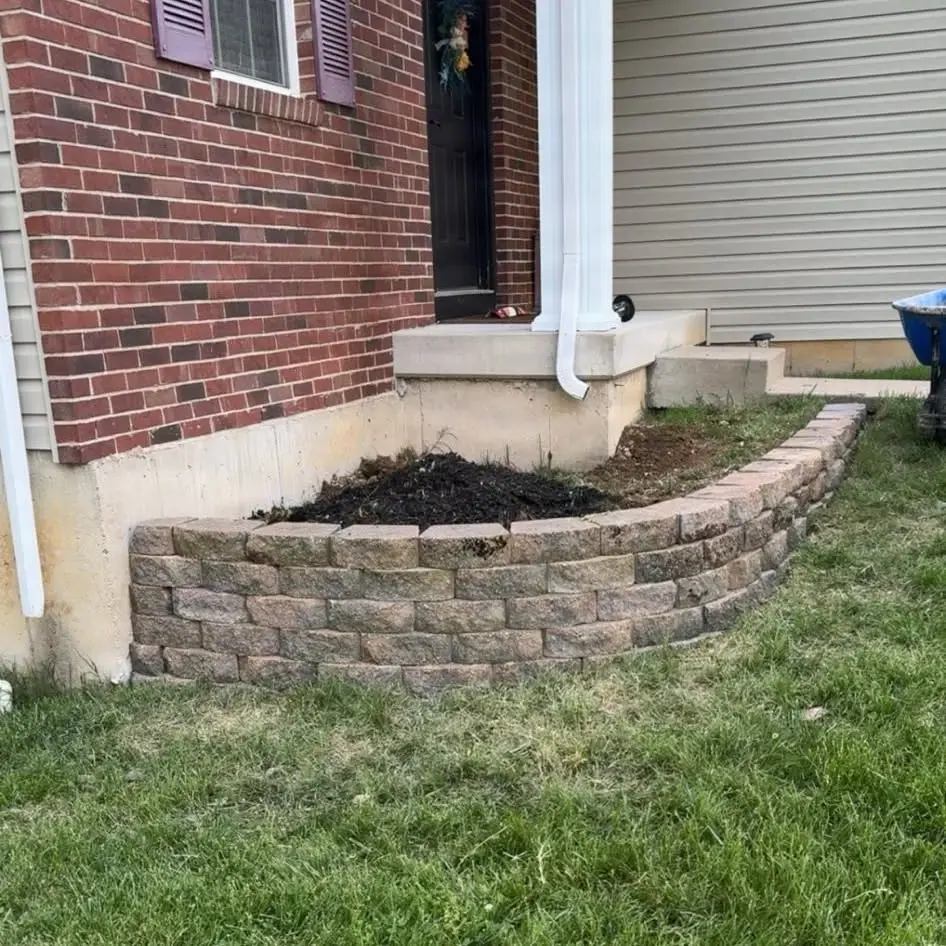
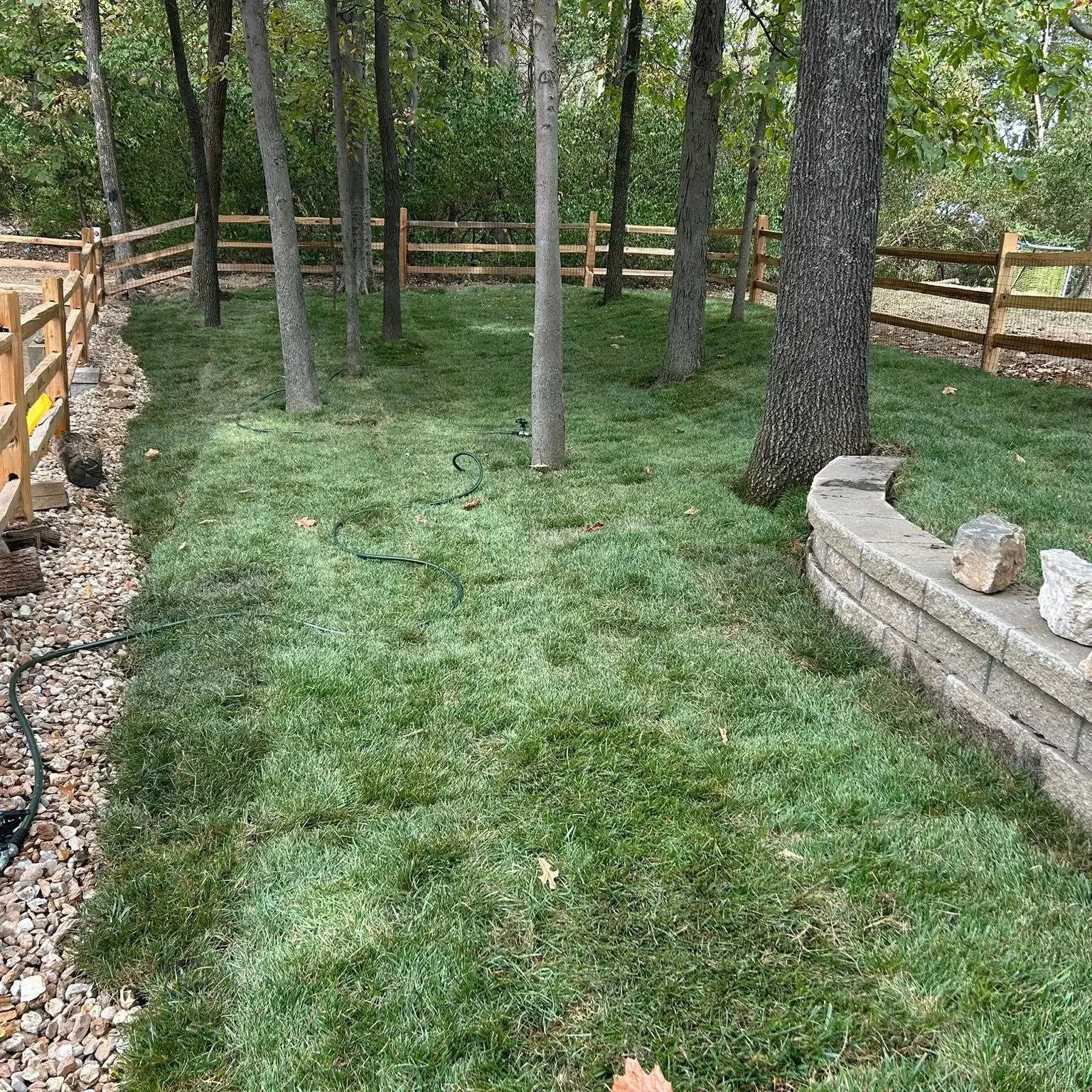
Our own walls include a curved block wall around a raised planting bed beside the front steps of a brick house, and a stacked stone wall with fresh sod laid in front of it under the trees. A curve takes more care than a straight run, because every block has to follow the line and still sit level.
Once the wall is up, the bed above it can be planted and mulched as part of our landscaping work, so the wall and the bed are finished together.
How a Block Retaining Wall Goes In
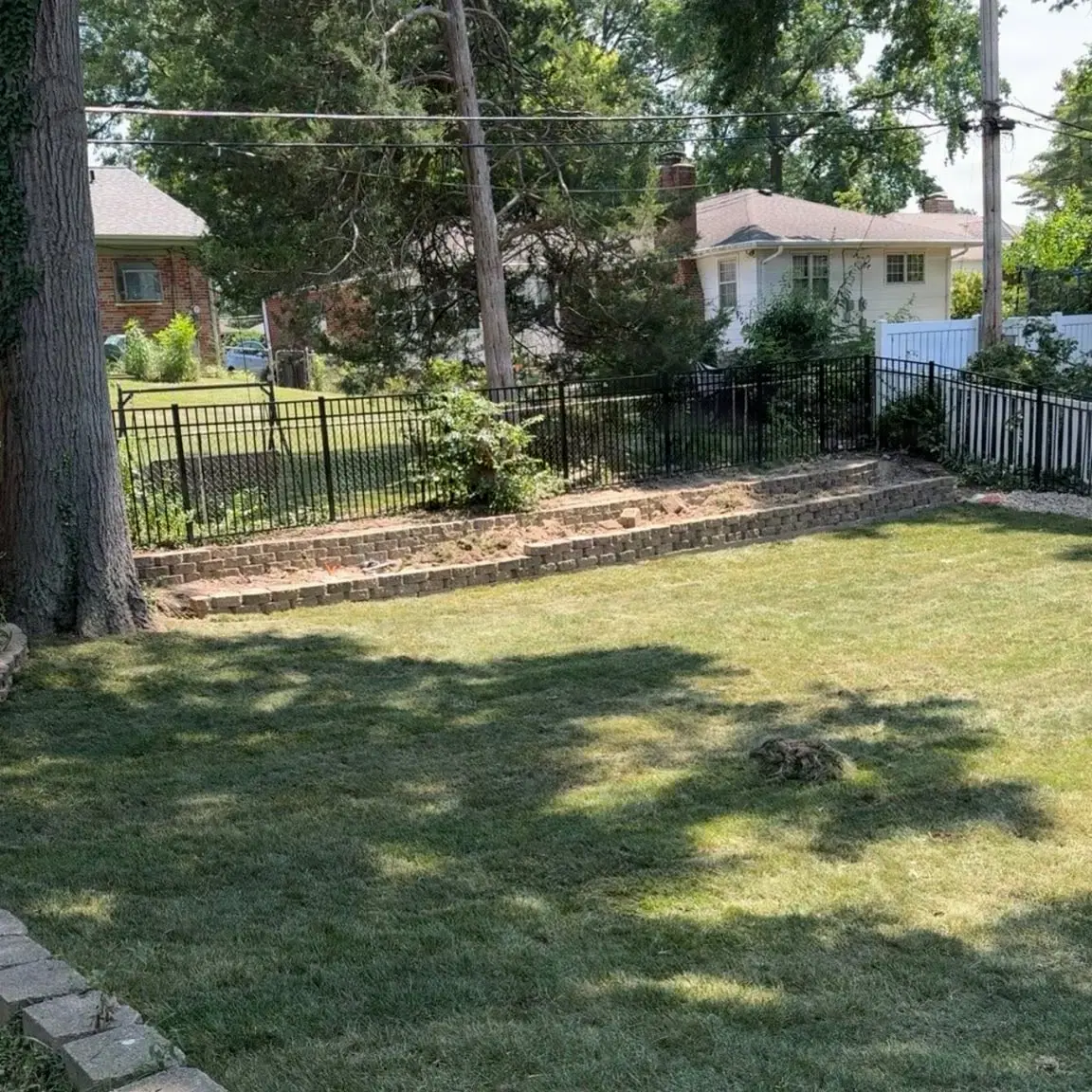
Every wall goes in the same order, and the parts that matter most are the ones you never see once it is done:
- The line and the height: we walk the yard with you and settle where the wall runs, how high it stands and where it curves.
- Trench and base: the trench is dug and a gravel base goes in, compacted so the wall sits on firm ground instead of soft clay.
- The first course: the bottom row of block is set level and buried, because every course above it follows that one.
- Stacking: each course is set back a little from the one below, so the wall leans into the slope it holds.
- Drainage behind: drain stone and a drain pipe go in behind the block, and the soil behind it is compacted in lifts as the wall goes up.
- Caps: cap stones finish the top.
Some things only show once the ground is open: big roots, an old wall buried in the slope, a soft wet spot in the clay. We tell you what we find before any block goes on top of it.
Why Walls Lean on St. Charles County Clay
When a wall leans or bulges, the cause is usually water behind it and no real base under it. The clay ground here holds water, swelling when it is wet and shrinking again as it dries, and a wall with nowhere for that water to go takes the push every season.
Then come the freeze-thaw winters, when water caught in the soil freezes and thaws over and over, and the storms that soak a hillside in an afternoon. That is why the drain stone, the pipe and the compacted base matter as much as the block you see.
The ground around the wall counts too. Rain running off the slope above should be led around the wall, not straight down behind it, and shaping that grade is part of our grading and drainage work.
Planning Your Wall
A few things are worth settling before the first block goes down: a straight or curved line, the block and cap you want to look at, and what goes above and in front of the wall, be it a planted bed, a lawn or a patio.
A tall wall holding back a hillside is a different job from a short wall around a bed. On a taller wall, your city's or county's rules decide what is needed, and they differ from town to town. Wentzville, for one, lists retaining walls over a set height among its permits; our Wentzville page has more on that.
Your wall's height and spot are what decide the rest, and we go over both with you at the site.
What Decides the Cost of a Retaining Wall
There is no set price for a wall. These decide what yours costs:
- The size: how long and how tall the wall is, and how much block that takes.
- Digging and tear-out: how much of the slope is cut back, and whether an old wall comes out first.
- The ground and the base: how much soft clay comes out and how much gravel and drain stone go in.
- Access for the machine: how close a skid steer can get to the line of the wall.
- What you pick: the block and caps, and any sod or plants that finish the job.
That also answers which wall costs the least: a short, straight wall in a yard the machine can reach takes less work than a tall, curved one at the back of a steep lot. We see all of it when we come take a look, and then you get a quote. Call or text (636) 795-6339 to set that up.
We serve homeowners across St. Charles County and over the Missouri River in Chesterfield. Tell us where you are and what the slope is doing, and we come out to see it.
Got a Slope That Needs a Wall?
Call or text (636) 795-6339 about your project.
Common Questions

-
That depends on what is under and behind it more than on the block. A compacted base, a level first course, and drain stone with a pipe that lets water out keep the pressure off the wall. On clay that holds water and freezes in winter, that drainage is what we build every wall around.
-
It holds back soil where the ground changes height. The block, the base under it and the drainage behind it work together, so the slope stays put and the ground in front can be flat enough for a lawn, a patio or a raised bed.
-
Not on its own. A wall holds soil, while standing water is a grading job: the low spots are filled and the yard is shaped so rain runs away from the house. Often the two go together on a sloped lot, and we look at both when we see the yard.
-
Your part is mostly deciding: where the wall runs, about how high it stands, the block and cap you like, and what goes above and in front of it. Move pots, furniture and anything else you want kept safe out of the way, and tell us about any soft or wet spots you know of. Call or text (636) 795-6339 and we set up a time to look.
-
Call or text (636) 795-6339 with what you have in mind (photos help), or send the form on our contact page. We come take a look at the job and give you a quote.
Ready to Get Started?
Call or text Gantner Outdoor Contracting at (636) 795-6339 about your project.
-
- Service Area St. Charles, MO
& St. Charles County - Get a Quote Call, text or send the formPatios, walls, yards & sod
- Find Us Online


